In the perpetual arms race between pathogens and humanity, the ability to anticipate the next viral threat has long been a scientific holy grail. For decades, virologists and epidemiologists have operated in a reactive mode, scrambling to understand novel viruses only after they had already spilled over into human populations, often with devastating consequences. This paradigm, however, is beginning to shift. A new frontier is emerging at the intersection of computational science and virology, where machine learning models are being trained to predict a virus's potential to make the fateful leap from animal hosts to humans—a phenomenon known as zoonotic spillover or host jumping.
The fundamental challenge of predicting host jumps is immense. Viruses are not static entities; they are dynamic, evolving swarms of genetic information. A virus circulating harmlessly in a bat or a bird today could acquire a handful of key mutations tomorrow, suddenly granting it the ability to recognize, bind to, and infect human cells. Traditionally, identifying these potentially dangerous pathogens involved painstaking field work, sample collection, and laboratory analysis, a process akin to searching for a needle in a planetary haystack. The vast majority of the estimated 1.67 million unknown viral species in mammal and bird hosts remain undiscovered, let alone assessed for their risk to humanity.
This is where machine learning offers a transformative advantage. Instead of physically testing every virus against human cells—a biological and logistical impossibility—scientists are now feeding algorithms with the known language of viruses: their genetic sequences. By analyzing the genomes of viruses known to have successfully jumped to humans, such as SARS-CoV-2, Ebola, and various influenza strains, these models learn to identify the subtle genomic signatures and patterns associated with zoonotic potential. They are, in effect, learning to read the genetic code of a virus and predict its intentions.
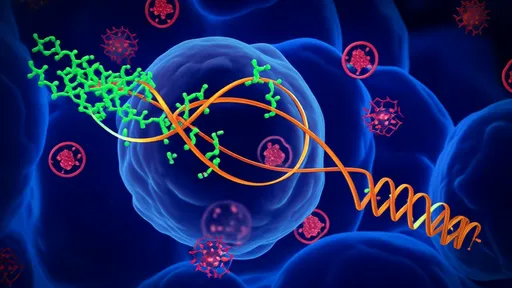
The process begins with data, and lots of it. Research consortia across the globe are building massive, curated databases that pair viral genomic sequences with metadata about their known hosts, transmission routes, and pathogenicity. This data forms the training ground for sophisticated algorithms. One prominent approach involves analyzing the compatibility between a virus's spike or envelope proteins and the receptors on the surface of human cells. The model might scrutinize the genetic instructions for building these proteins, looking for similarities to viruses we already know can latch onto human ACE2 receptors (like SARS-CoV-2) or other entry points.
But the predictions go far beyond simple receptor binding. Advanced models incorporate a multitude of features. They examine the virus's codon usage bias—its preference for certain genetic "words" over others—to see if it aligns with the preferences of human cells, which can affect how efficiently the virus can hijack our cellular machinery to replicate. They look at the stability of the viral genome and its potential to evade the human immune system. Some models even integrate ecological and epidemiological data, weighing factors like the geographical overlap between the animal host and human populations, the density of livestock farming, and wildlife trade patterns. This creates a multi-dimensional risk profile that is far more nuanced than genetic analysis alone.
The implications of this technology for proactive public health are profound. Imagine a near future where a field virologist sequences a novel coronavirus from a bat sample in a remote cave. Instead of filing the data away for later study, they could immediately run it through a predictive model. Within hours, they would receive a probability score—a zoonotic risk rating. A virus flagged as high-risk could then be prioritized for further study in secure biosafety level laboratories, where its behavior could be tested in cell cultures or animal models. This early warning system could buy public health agencies invaluable time to develop diagnostic tests, draft surveillance protocols, and even initiate early-stage vaccine research before a single human case ever occurs.
However, this powerful tool is not without its significant limitations and ethical quandaries. The old adage of computer science, "garbage in, garbage out," is acutely relevant. The predictive power of any model is entirely dependent on the quality and breadth of its training data. Our current knowledge of viruses is heavily biased toward those that have already caused human disease. We know far less about the millions of viruses that haven't jumped, creating a potential blind spot. A model trained only on successful human pathogens might miss viruses that achieve spillover through a completely novel, unseen mechanism.
Furthermore, the act of prediction itself raises complex questions. Who has access to these risk predictions? Should a high-risk score for a virus be made public to spur preparedness, or could it cause unnecessary panic or stigmatization of certain regions or animal species? There is also the dual-use dilemma: the same research that identifies a dangerous virus to help mitigate its threat could, in the wrong hands, be misused to engineer biological weapons. The scientific community is therefore grappling with the need to develop strong ethical frameworks and governance structures alongside the technology itself.
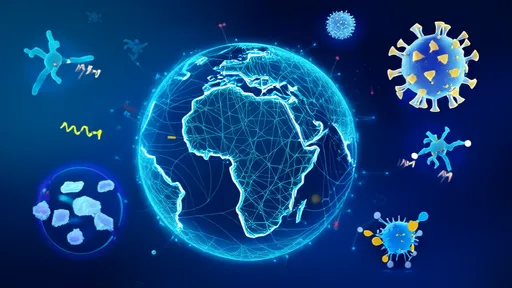
Despite these challenges, the progress is undeniable. Research groups have already published proof-of-concept studies demonstrating promising accuracy. For instance, models have successfully retrospectively "predicted" the zoonotic risk of viruses like SARS-CoV-2 with high confidence, based solely on their genetic sequence before the pandemic began. The goal now is to refine these models, expand the datasets, and begin integrating them into global viral surveillance networks like the Global Virome Project. The vision is a decentralized, digital immune system for the planet, constantly analyzing genetic data from the frontiers of disease emergence.
Machine learning will not replace traditional virology; wet lab experiments and field surveillance remain the bedrock of our understanding. But it is becoming an indispensable force multiplier. By turning the unimaginably vast unknown into a computationally tractable problem, it provides a powerful lens through which to focus our efforts. It shifts the narrative from one of fear and reaction to one of foresight and preparedness. In the fight against future pandemics, these algorithms are becoming our most advanced scouts, venturing into the genomic wilderness to warn us of what might be coming over the horizon, giving us a fighting chance to meet it head-on.
By /Aug 27, 2025
By /Aug 27, 2025
By /Aug 27, 2025

By /Aug 27, 2025
By /Aug 27, 2025

By /Aug 27, 2025
By /Aug 27, 2025
By /Aug 27, 2025
By /Aug 27, 2025
By /Aug 27, 2025
By /Aug 27, 2025

By /Aug 27, 2025
By /Aug 27, 2025
By /Aug 27, 2025

By /Aug 27, 2025

By /Aug 27, 2025

By /Aug 27, 2025
By /Aug 27, 2025

By /Aug 27, 2025
By /Aug 27, 2025