The intricate dance of microbial life beneath oil-contaminated sites represents one of nature's most sophisticated cleanup crews. For decades, scientists have observed the remarkable capacity of certain bacterial communities to break down complex petroleum hydrocarbons, transforming environmental pollutants into harmless byproducts. This natural process, known as bioremediation, has gained significant attention as industries and governments seek sustainable solutions for addressing oil spills and contaminated lands.
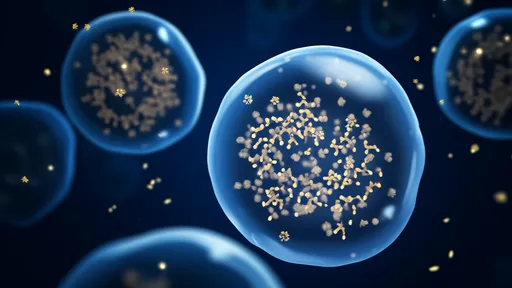
Recent breakthroughs in molecular biology and genomics have revealed that petroleum degradation is rarely accomplished by single bacterial species working in isolation. Instead, complex consortia of microorganisms work together through what researchers term synergistic metabolic networks. These networks function like well-orchestrated assembly lines, where different bacterial species specialize in breaking down specific components of the petroleum mixture, passing intermediate compounds along to other specialists until complete mineralization occurs.
The complexity of crude oil itself necessitates this collaborative approach. Petroleum contains thousands of different hydrocarbon compounds ranging from simple straight-chain alkanes to complex polycyclic aromatic hydrocarbons (PAHs). No single microorganism possesses the complete enzymatic toolkit to degrade all these diverse compounds efficiently. Through millions of years of evolution, microbial communities have developed sophisticated division-of-labor strategies that allow them to tackle these challenging substrates collectively.
Research published in leading environmental science journals has demonstrated that these microbial networks exhibit emergent properties that far exceed the capabilities of individual species. When working together, bacterial consortia can degrade pollutants at rates up to forty times faster than isolated strains. This super-efficient cleanup capability stems from several synergistic mechanisms including metabolic cross-feeding, co-metabolism, and genetic exchange that allows communities to rapidly adapt to changing environmental conditions and pollutant profiles.
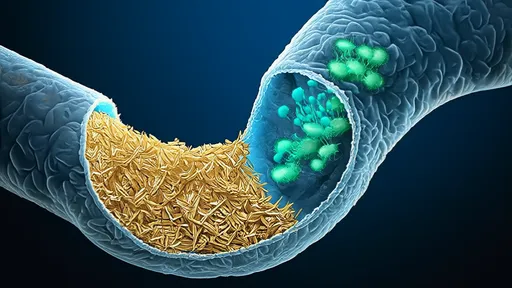
Metabolic cross-feeding represents perhaps the most fascinating aspect of these microbial networks. In this process, primary degraders break down complex hydrocarbons into simpler intermediates that they cannot further metabolize. These compounds then become nutritional substrates for secondary degraders, which complete the degradation process. This creates a metabolic pipeline where waste products from one organism become food for another, ensuring complete degradation while preventing the accumulation of potentially toxic intermediates.
The communication within these microbial communities extends beyond mere metabolic exchange. Scientists have discovered intricate signaling systems where bacteria coordinate their degradation activities through quorum sensing molecules. These chemical signals allow bacterial populations to sense their density and synchronize their enzymatic production, essentially ensuring that degradation enzymes are only produced when sufficient workforce is present to make the metabolic investment worthwhile. This regulatory sophistication prevents energy waste and optimizes cleanup efficiency.
Environmental factors play crucial roles in shaping these microbial networks. Temperature, pH, oxygen availability, and nutrient concentrations all influence which bacterial species dominate and how effectively they collaborate. Aerobic conditions typically support faster degradation rates, as oxygen activates key enzymatic pathways. However, researchers have discovered remarkable anaerobic consortia that can degrade hydrocarbons in oxygen-depleted environments using alternative electron acceptors like nitrate, sulfate, or iron compounds.
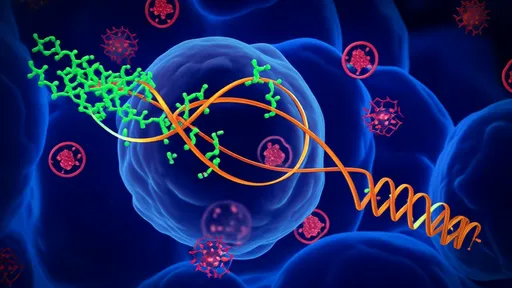
The genomic flexibility of petroleum-degrading communities represents another area of intense scientific interest. Many hydrocarbon-degrading genes are carried on mobile genetic elements such as plasmids and transposons, allowing rapid horizontal gene transfer between community members. This genetic mobility enables microbial networks to quickly adapt to new pollutant challenges, essentially sharing their biodegradation toolkit across species boundaries to enhance community resilience and functional capacity.
Field applications of these principles have yielded promising results. Several successful bioremediation projects have employed bioaugmentation (adding specialized bacterial consortia) and biostimulation (optimizing environmental conditions) to enhance natural degradation processes. The most effective approaches carefully match microbial communities to specific contaminant profiles while creating conditions that foster synergistic interactions between native and introduced microorganisms.
Despite these advances, significant challenges remain in harnessing microbial networks for large-scale bioremediation. The complexity of interspecies interactions makes predicting community behavior difficult, and environmental conditions often fluctuate in ways that disrupt carefully balanced metabolic networks. Researchers are now developing sophisticated computational models that can simulate these complex interactions, helping to predict how microbial communities will respond to different intervention strategies.
Future directions in petroleum bioremediation research focus on engineering synthetic microbial communities with optimized degradation pathways. By carefully selecting compatible strains and pre-adapting them to target contaminants, scientists hope to create super-efficient cleanup consortia that can be deployed in various contamination scenarios. Combined with advanced monitoring techniques that track both pollutant reduction and microbial community dynamics, these approaches promise more predictable and effective bioremediation outcomes.
The study of petroleum-degrading microbial networks continues to reveal nature's remarkable capacity for environmental restoration. As research advances, these natural cleanup crews may provide sustainable solutions for addressing one of our most persistent environmental challenges. The sophisticated collaboration between microscopic organisms offers both inspiration and practical strategies for managing human impacts on the planet.
By /Aug 27, 2025
By /Aug 27, 2025
By /Aug 27, 2025
By /Aug 27, 2025
By /Aug 27, 2025
By /Aug 27, 2025
By /Aug 27, 2025
By /Aug 27, 2025
By /Aug 27, 2025
By /Aug 27, 2025
By /Aug 27, 2025
By /Aug 27, 2025
By /Aug 27, 2025
By /Aug 27, 2025
By /Aug 27, 2025
By /Aug 27, 2025
By /Aug 27, 2025
By /Aug 27, 2025
By /Aug 27, 2025
By /Aug 27, 2025
