In the quiet corners of our planet, a subtle symphony plays out each day. The rustle of leaves, the chorus of birds at dawn, the distant hum of insects—these are not merely background noise but vital signs of ecological vitality. For decades, scientists have sought ways to measure ecosystem health, often relying on labor-intensive field surveys or satellite imagery. But a revolutionary approach is now gaining traction: the use of bioacoustic monitoring and soundscape indices to assess the well-being of natural environments. This method listens to nature's orchestra, decoding the complex audio tapestry to reveal insights about biodiversity, habitat quality, and even the impacts of human activity.
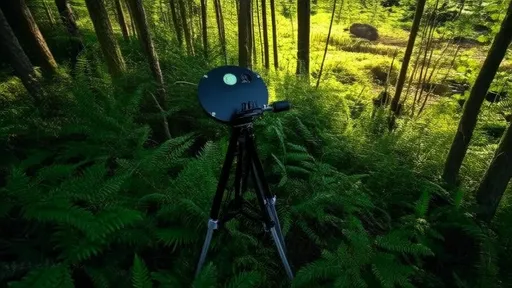
The concept of soundscape ecology emerged in the early 21st century, building on the idea that every environment has a unique acoustic signature. Pioneers like Bernie Krause, a soundscape ecologist and musician, demonstrated that healthy ecosystems exhibit rich, layered soundscapes, whereas degraded ones often sound simpler or dominated by anthropogenic noise. Today, advancements in technology have made it possible to deploy autonomous recording units in remote locations, capturing months or even years of continuous audio data. These devices, often solar-powered and weather-resistant, are transforming how we monitor ecosystems, especially in areas that are difficult to access or require non-invasive observation.
At the heart of this approach are soundscape indices—mathematical metrics derived from audio recordings that quantify various aspects of the acoustic environment. One widely used index is the Acoustic Complexity Index (ACI), which measures the variability in sound intensity and can help distinguish between biotic sounds (like bird songs) and abiotic noises (such as wind or rain). Another, the Bioacoustic Index (BI), focuses on the frequency and amplitude of biological sounds, providing an estimate of animal activity. The Normalized Difference Soundscape Index (NDSI) compares the levels of biological sounds to anthropogenic noise, offering a clear indicator of human impact on natural soundscapes. These indices, among others, allow researchers to analyze vast datasets efficiently, turning hours of audio into actionable insights about ecosystem health.
What makes bioacoustic monitoring so powerful is its ability to capture data continuously and non-invasively. Traditional methods, like visual surveys or trapping, can disturb wildlife and are often limited by time, weather, or observer bias. In contrast, recording devices operate silently day and night, documenting events that might otherwise go unnoticed—nocturnal animal calls, rare species vocalizations, or sudden changes in sound patterns due to environmental stressors. This passive approach is particularly valuable for monitoring sensitive or endangered species, as it minimizes human presence and reduces the risk of altering animal behavior.
Applications of this technology span the globe, from tropical rainforests to marine environments. In the Amazon, researchers have used soundscape indices to track deforestation and habitat fragmentation, noting how the loss of tree cover leads to quieter, less diverse soundscapes. In coral reefs, hydrophones capture the clicks, pops, and grunts of marine life, with studies showing that healthy reefs have more complex acoustic profiles than those degraded by bleaching or pollution. Even in urban areas, bioacoustics is being used to assess green spaces, evaluating how parks and reserves support biodiversity amidst the cacophony of city life.
Despite its promise, bioacoustic monitoring is not without challenges. Analyzing audio data requires significant computational power and sophisticated algorithms to filter out irrelevant noises—like rain, wind, or distant traffic—and accurately identify biological sounds. Machine learning and artificial intelligence are playing an increasingly important role here, with models trained to recognize specific species calls or classify sounds automatically. However, these tools are still evolving, and there is a need for standardized protocols to ensure that soundscape indices are comparable across studies and regions. Moreover, interpreting the data requires ecological expertise; a change in soundscape might reflect seasonal patterns, migration, or other natural variations, not just degradation.
Looking ahead, the integration of bioacoustics with other monitoring technologies could unlock even deeper insights. For instance, combining audio data with remote sensing or environmental DNA (eDNA) sampling might provide a more holistic view of ecosystem health. As recording devices become cheaper and more efficient, citizen science projects are also emerging, engaging the public in collecting and analyzing sound data from local environments. This democratization of science could expand the scale of monitoring efforts, fostering greater awareness and stewardship of natural soundscapes.
In an era of rapid environmental change, the need for effective ecosystem assessment has never been greater. Bioacoustic monitoring offers a novel, efficient, and empathetic way to listen to the pulse of the planet. By tuning into nature's frequencies, we gain a deeper understanding of the intricate web of life and the pressures it faces. Perhaps, in preserving these soundscapes, we are not only safeguarding biodiversity but also protecting the ancient melodies that have shaped human culture and connection to the wild for millennia.

By /Aug 27, 2025
By /Aug 27, 2025

By /Aug 27, 2025
By /Aug 27, 2025

By /Aug 27, 2025

By /Aug 27, 2025

By /Aug 27, 2025

By /Aug 27, 2025
By /Aug 27, 2025
By /Aug 27, 2025
By /Aug 27, 2025

By /Aug 27, 2025
By /Aug 27, 2025
By /Aug 27, 2025

By /Aug 27, 2025

By /Aug 27, 2025

By /Aug 27, 2025

By /Aug 27, 2025

By /Aug 27, 2025

By /Aug 27, 2025
