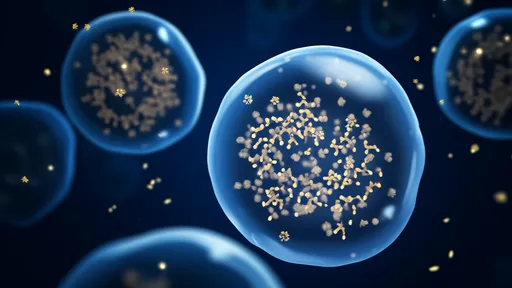
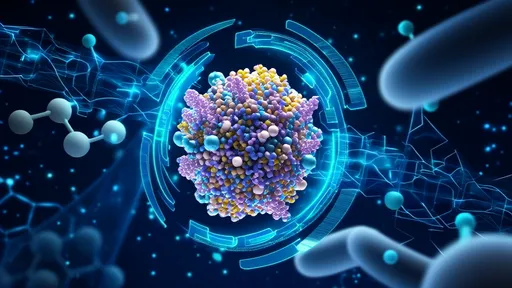
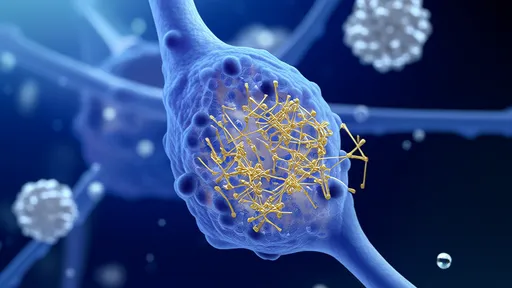
In the rapidly evolving landscape of longevity science, mitochondrial unfolded protein response (UPRmt) has emerged as a compelling target for therapeutic interventions against aging. This intricate cellular mechanism, once considered a niche area of study, now stands at the forefront of gerontological research due to its profound influence on cellular health and organismal lifespan. The UPRmt represents a sophisticated surveillance system that detects and rectifies protein misfolding within mitochondria, the energy powerhouses of our cells. As we age, mitochondrial function declines, leading to an accumulation of damaged proteins and cellular stress. The activation of UPRmt serves as a critical defense mechanism, orchestrating a complex transcriptional program to restore proteostasis and mitochondrial integrity.
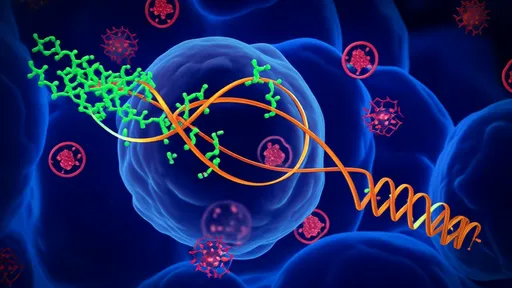
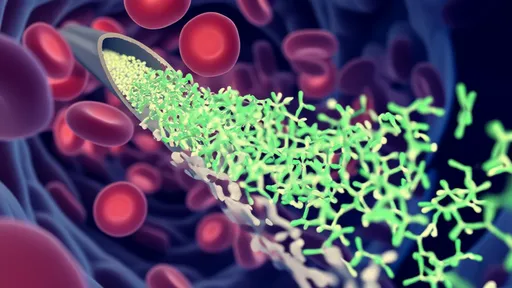
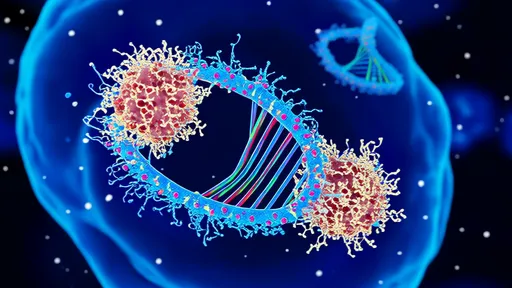
The fundamental biology of UPRmt involves a cascade of signaling events initiated when misfolded proteins accumulate in the mitochondrial matrix. This stress signal is relayed to the nucleus through several well-characterized pathways, triggering the expression of mitochondrial chaperones, proteases, and other quality control factors. Key players in this process include the transcription factor ATFS-1 in worms and its mammalian counterpart ATF5, which coordinate the transcriptional response. Additionally, sirtuins, particularly SIRT3, and NAD+ levels have been shown to modulate UPRmt activation, creating intriguing connections between mitochondrial health and metabolic regulation.
Recent breakthroughs in understanding UPRmt regulation have revealed its remarkable potential for extending healthspan. Studies across multiple model organisms have demonstrated that genetic or pharmacological enhancement of UPRmt signaling can significantly improve mitochondrial function and delay age-related decline. The most striking evidence comes from research showing that mild mitochondrial stress, which activates UPRmt, can actually produce a hormetic effect—strengthening cellular defense mechanisms and promoting longevity. This phenomenon, often referred to as mitohormesis, suggests that strategically stimulating UPRmt could yield substantial benefits for aging organisms.
The therapeutic targeting of UPRmt presents both exciting opportunities and significant challenges. Several compounds have shown promise in modulating this pathway, including NAD+ precursors like nicotinamide riboside, which enhance SIRT3 activity and subsequently boost UPRmt. Natural compounds such as oligomycin and doxycycline have been used in research settings to induce mild mitochondrial stress and activate the response. However, the delicate balance required for effective intervention cannot be overstated—excessive activation could potentially be harmful, while insufficient stimulation might yield no benefit. This narrow therapeutic window demands precise pharmacological approaches and thorough safety profiling.
Translating UPRmt research into clinical applications requires addressing several critical considerations. The complexity of mitochondrial biology and its integration with other cellular processes means that UPRmt modulation must be carefully coordinated with broader cellular homeostasis. Furthermore, individual variations in mitochondrial function and aging trajectories suggest that personalized approaches might be necessary. Researchers are currently developing biomarkers to monitor UPRmt activation in humans, which will be essential for clinical trials and eventual therapeutic monitoring. The development of tissue-specific targeting strategies also represents an important frontier, as mitochondrial function and stress responses can vary significantly between different organs and cell types.
Looking toward the future, the manipulation of UPRmt holds tremendous promise for addressing age-related diseases and extending human healthspan. As research continues to unravel the complexities of this pathway, we anticipate the emergence of more sophisticated interventions that can precisely modulate mitochondrial quality control. The integration of UPRmt targeting with other longevity strategies, such as senolytics or metabolic interventions, may offer synergistic benefits. While significant work remains before these approaches reach clinical practice, the current pace of discovery suggests that UPRmt-based therapies could become important tools in our arsenal against aging and its associated diseases.
The ethical implications and societal considerations of developing aging interventions targeting UPRmt warrant careful discussion. As with any emerging longevity technology, questions regarding accessibility, safety, and the very definition of healthy aging must be addressed proactively. The scientific community, in collaboration with ethicists and policymakers, must establish guidelines for the responsible development of these therapies. Public education about the distinction between healthspan extension and mere lifespan prolongation will be crucial for setting realistic expectations and ensuring that these advances benefit society as a whole.
In conclusion, mitochondrial unfolded protein response represents a paradigm shift in how we approach aging intervention. Rather than viewing aging as an inevitable decline, UPRmt research offers a perspective of malleable biological processes that can be therapeutically targeted. The ongoing research in this field continues to reveal the profound interconnectedness of cellular quality control mechanisms and their impact on organismal aging. While challenges remain in translating these discoveries into safe and effective human therapies, the potential rewards—extended healthspan, reduced age-related disease burden, and improved quality of life in later years—make this one of the most promising frontiers in modern medicine.
By /Aug 27, 2025
By /Aug 27, 2025

By /Aug 27, 2025

By /Aug 27, 2025
By /Aug 27, 2025

By /Aug 27, 2025
By /Aug 27, 2025

By /Aug 27, 2025
By /Aug 27, 2025
By /Aug 27, 2025
By /Aug 27, 2025

By /Aug 27, 2025
By /Aug 27, 2025

By /Aug 27, 2025

By /Aug 27, 2025

By /Aug 27, 2025

By /Aug 27, 2025
By /Aug 27, 2025

By /Aug 27, 2025
By /Aug 27, 2025
