The landscape of genetic engineering is undergoing a seismic shift, moving beyond the revolutionary but sometimes blunt instrument of CRISPR-Cas9. For years, CRISPR has been the undisputed champion of the gene-editing arena, offering scientists an unprecedented ability to snip and edit DNA with relative ease. Its applications have spanned from groundbreaking therapies for genetic disorders to innovations in agriculture. However, its limitations—notably off-target effects and the inherent challenge of making precise single-base changes without causing double-strand breaks—have spurred a fervent search for more refined, next-generation tools. The scientific community is now abuzz with the advent of technologies that promise even greater precision, efficiency, and safety, heralding a new era of genomic medicine and biological research.
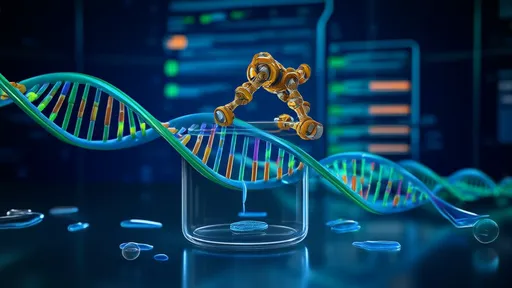
Among the most promising of these new technologies are base editors, a class of engineered proteins that directly convert one DNA base into another without cutting the DNA double helix. Developed initially by David Liu's lab at the Broad Institute, base editors come in two primary forms: cytosine base editors (CBEs), which change a C•G base pair to a T•A, and adenine base editors (ABEs), which convert an A•T base pair to a G•C. This approach is akin to using a pencil with a fine eraser rather than scissors; it corrects point mutations—which account for a vast majority of known genetic diseases—with remarkable efficiency and a significantly reduced risk of introducing unintended indels or genomic rearrangements. The refinement of these editors, with improved versions boasting higher precision and broader editing windows, is accelerating their path toward clinical trials for conditions like sickle cell anemia and progeria.
Parallel to the development of base editors is the rise of prime editing, a even more versatile "search-and-replace" technology also pioneered by Liu's team. Dubbed a "genetic word processor," prime editing uses a catalytically impaired Cas9 enzyme fused to a reverse transcriptase enzyme and is guided by a prime editing guide RNA (pegRNA). This pegRNA not directs the Cas9 to the target site but also carries the new genetic information to be written. This system can theoretically correct about 90% of known disease-causing genetic variants, including all twelve types of point mutations, as well as insertions and deletions, all without requiring double-strand breaks or donor DNA templates. Its elegance lies in its ability to make precise, clean edits with minimal off-target activity, addressing a core weakness of traditional CRISPR systems.
Another frontier being explored is the use of transposons, or "jumping genes," as delivery vehicles for genetic cargo. While CRISPR relies on cellular repair mechanisms that can be error-prone, transposon-based systems like the novel CRISPR-associated transposase systems can insert large stretches of DNA with high efficiency and specificity into predetermined genomic sites. These systems, derived from bacteria, combine the programmability of CRISPR with the natural gene-insertion machinery of transposons. This opens up possibilities not just for correcting mutations, but for writing entirely new genetic sequences into the genome, a capability with profound implications for gene therapy, synthetic biology, and the development of sustainable biomanufacturing processes.
The quest for precision has also led to the engineering of ultra-high-fidelity Cas enzymes. The original Cas9 from Streptococcus pyogenes, while powerful, is notorious for its occasional off-target cuts. Researchers have responded by creating variants like HiFi Cas9 and eSpCas9, which maintain high on-target activity while drastically reducing off-target effects through protein engineering. Furthermore, the discovery and characterization of novel Cas proteins from diverse bacterial species, such as the smaller CasΦ for easier delivery or the highly specific Cas12f, are expanding the gene-editing toolbox, offering enzymes with varied sizes, specificities, and PAM requirements to suit different therapeutic and research applications.
Beyond single-gene edits, the field is advancing towards multiplexed editing and epigenetic programming. Technologies are now enabling scientists to target and edit multiple genes simultaneously, a critical requirement for understanding complex polygenic diseases or engineering sophisticated metabolic pathways in microbes. Meanwhile, epigenome editors, which use modified CRISPR systems to recruit enzymes that add or remove epigenetic marks like methylation or acetylation, allow researchers to alter gene expression without changing the underlying DNA sequence. This provides a powerful, potentially reversible, method for studying development and disease and opens doors to a new class of therapies that modulate gene activity rather than the genes themselves.
As with any powerful technology, the ethical considerations surrounding these next-generation editors are profound and complex. The enhanced precision and safety could make heritable human genome editing a more technically feasible prospect, reigniting urgent debates about germline modification. The ability to make extensive, multiplexed changes also raises biosafety and biosecurity concerns. The global scientific and bioethics communities continue to emphasize the necessity of robust ethical frameworks, transparent public discourse, and stringent regulatory oversight to ensure these technologies are developed and deployed responsibly, prioritizing therapeutic applications for serious diseases while guarding against misuse.
The transition from the CRISPR era to this new age of precision editing is not merely an incremental improvement but a fundamental evolution. These new tools are providing researchers with an unprecedented level of control over the genetic code, moving from crude cuts to nuanced pencil-like corrections and even programmable word processing. While challenges in delivery efficiency, specificity, and immune response remain significant hurdles for clinical translation, the pace of innovation is breathtaking. These advancements are poised to unlock deeper understandings of biology and usher in a new generation of transformative therapies that were once confined to the realm of science fiction, truly marking a paradigm shift in our ability to read, write, and rewrite the book of life.

By /Aug 25, 2025

By /Aug 25, 2025

By /Aug 25, 2025

By /Aug 25, 2025

By /Aug 25, 2025
By /Aug 25, 2025
By /Aug 25, 2025
By /Aug 25, 2025
By /Aug 25, 2025

By /Aug 25, 2025
By /Aug 25, 2025
By /Aug 25, 2025
By /Aug 25, 2025
By /Aug 25, 2025
By /Aug 25, 2025

By /Aug 25, 2025

By /Aug 25, 2025

By /Aug 25, 2025
By /Aug 25, 2025

By /Aug 25, 2025
