Advances in the Application of Remote Sensing Technology for Biodiversity Monitoring

Aug 25, 2025 By

As the global community grapples with accelerating biodiversity loss, the scientific world has turned to increasingly sophisticated tools to monitor and understand these changes. Among these, remote sensing technology has emerged as a transformative force, fundamentally altering our capacity to observe, measure, and analyze life on Earth from a distance. This technological revolution is providing an unprecedented, macro-scale view of ecological systems, offering data that is both critical for conservation and impossible to gather through ground-based methods alone.

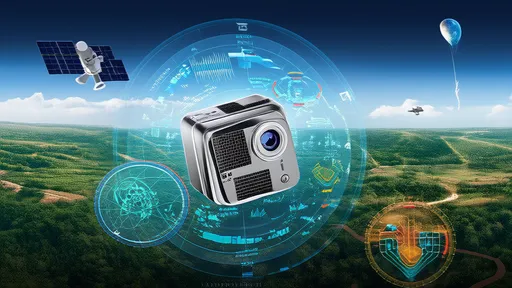
The evolution of remote sensing for ecological applications has been nothing short of remarkable. From the early days of basic aerial photography used for land cover classification, we have moved into an era of hyper-specialized satellites and sensors. Modern systems capture data far beyond the visible spectrum, measuring everything from the chemical composition of the atmosphere to the minute structural details of a forest canopy. Hyperspectral sensors, for instance, can detect subtle variations in leaf chemistry that indicate plant stress or species type, while LiDAR (Light Detection and Ranging) constructs intricate three-dimensional models of vegetation structure, revealing habitat complexity in stunning detail. This shift from simple observation to complex biochemical and structural analysis represents a quantum leap in our ecological understanding.

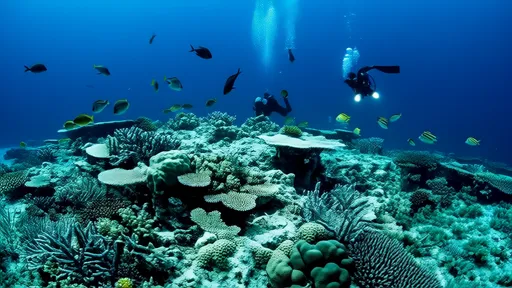
One of the most powerful applications of this technology lies in habitat mapping and monitoring. Satellites can now track deforestation and forest degradation across entire continents with high temporal resolution, spotting illegal logging activities or the spread of wildfires in near-real-time. Similarly, the technology is indispensable for monitoring fragile and inaccessible ecosystems like wetlands, mangroves, and coral reefs. Changes in water extent, vegetation health, and even sea surface temperature can be monitored continuously, providing early warning signs of ecosystem distress. This constant, wide-eyed vigilance from space creates a permanent digital record of change, holding a mirror to both the gradual creep and sudden shocks impacting global habitats.

Perhaps even more groundbreaking is the technology's burgeoning role in observing species populations and their dynamics. While counting individual animals from space remains a challenge for most species, remote sensing excels at identifying suitable habitats and, by extension, predicting species distribution. For larger species or colonial animals, the imagery has become sharp enough to be used directly. High-resolution satellites have been successfully used to count whales, elephants, albatrosses, and penguins, among others. Furthermore, by analyzing environmental variables like vegetation greenness (a proxy for productivity) or snow cover, scientists can make informed inferences about the movement patterns of migratory species and the availability of critical resources, linking animal behavior to landscape-level processes.

The true power of remote sensing is unlocked when its data is fused with field-based ecological studies. Satellite imagery provides the expansive context—the where and the when—while ground-truthing provides the crucial why and how. Ecologists on the ground collect data on species presence, abundance, and health, which is then used to calibrate and validate the models derived from remote sensing data. This synergy creates a feedback loop: remote sensing guides field teams to areas of interest or change, and field data, in turn, improves the accuracy of the algorithms that interpret the satellite signals. This collaborative approach ensures that the story told by the pixels in the sky is grounded in biological reality.

Despite its immense potential, the path forward is not without significant hurdles. Cloud cover remains a persistent obstacle for optical sensors, particularly in the tropical regions that host the planet's greatest biodiversity. The sheer volume of data generated, often termed "big data," presents another challenge, requiring advanced computational power and sophisticated machine learning algorithms to process and interpret effectively. There is also a pressing need to bridge the gap between the technical remote sensing community and conservation managers on the front lines. The data must be translated into accessible, actionable information to inform policy decisions and on-the-ground conservation actions effectively.

Looking ahead, the future of biodiversity monitoring is intrinsically linked to the advancement of remote sensing technologies. The upcoming launch of even more advanced satellites, the proliferation of drones for hyper-local monitoring, and the rapid development of artificial intelligence for image analysis promise a new era of ecological insight. We are moving towards a future where the pulse of the planet—its breathing forests, its shifting animal migrations, its changing coastlines—can be monitored continuously and comprehensively. This isn't just about counting what we are losing; it is about gaining the profound understanding necessary to protect it. Remote sensing offers a beacon of hope, a powerful eye in the sky that empowers humanity to become better stewards of our planet's irreplaceable biological heritage.
Recommend Posts
Science

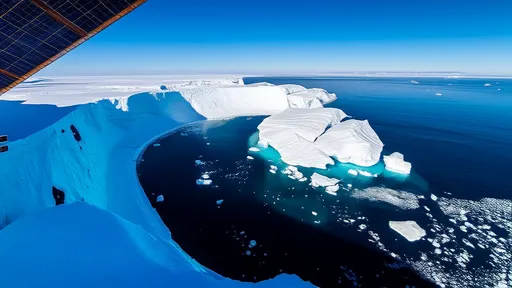
Polar Ice Sheet Changes: Mass Loss Revealed by Satellite Observations

By /Aug 25, 2025

Satellite observations over the past three decades have fundamentally reshaped our understanding of polar ice sheet dynamics, revealing a story of accelerating mass loss with profound implications for global sea levels and climate systems. What was once perceived as slow-moving, largely stable expanses of ice are now understood to be highly responsive to atmospheric and oceanic changes, with melt rates that have consistently outpaced earlier scientific projections. The data, gathered through a combination of altimetry, gravimetry, and imagery from an international fleet of Earth-observing satellites, provides an unambiguous and alarming record of change at the planet’s extremities.
Science

Carbon Capture Technology: Development and Testing of New Adsorbent Materials

By /Aug 25, 2025

In the race against climate change, carbon capture technologies have emerged as a critical frontier in global efforts to reduce atmospheric CO2 levels. Among the most promising advancements in this field is the development of novel adsorbent materials designed to efficiently capture carbon dioxide from industrial emissions and even directly from the air. These materials represent a significant leap forward from traditional methods, offering higher selectivity, greater capacity, and reduced energy requirements for regeneration.
Science

Advances in the Application of Remote Sensing Technology for Biodiversity Monitoring

By /Aug 25, 2025

As the global community grapples with accelerating biodiversity loss, the scientific world has turned to increasingly sophisticated tools to monitor and understand these changes. Among these, remote sensing technology has emerged as a transformative force, fundamentally altering our capacity to observe, measure, and analyze life on Earth from a distance. This technological revolution is providing an unprecedented, macro-scale view of ecological systems, offering data that is both critical for conservation and impossible to gather through ground-based methods alone.
Science

Long-term Observations of Ecosystem Responses to Ocean Acidification

By /Aug 25, 2025

For over a decade, marine biologists have maintained a silent vigil beneath the waves, tracking a subtle yet profound shift in the world’s oceans. The subject of their watch is not a charismatic megafauna or a vanishing coral reef, but something far more fundamental: the changing chemistry of seawater itself. This phenomenon, known as ocean acidification, represents one of the most significant and understated consequences of rising atmospheric carbon dioxide. As CO2 dissolves into the sea, it triggers a cascade of chemical reactions, lowering the pH and altering the very building blocks of marine life. The long-term observation of how ecosystems respond to this creeping change is not merely an academic exercise; it is a critical endeavor to understand the future of our planet’s largest habitat.
Science

Climate Change Simulation: Predictive Capabilities of the New Generation of Climate Models

By /Aug 25, 2025

The scientific community stands at a pivotal juncture in the long and arduous journey of climate modeling. The latest generation of climate models, often referred to collectively as CMIP6, represents not merely an incremental upgrade but a profound leap in our computational and conceptual understanding of the Earth's complex systems. These sophisticated digital laboratories are the culmination of decades of research, harnessing unprecedented computing power to simulate the intricate dance of atmosphere, ocean, land, and ice. Their emergence marks a new era in climate science, one where the blurry picture of our planet's future is coming into a sharper, albeit sometimes more unsettling, focus.
Science

Development of Environmentally Adaptive Systems

By /Aug 25, 2025

The development of environmentally adaptive systems represents one of the most transformative frontiers in materials science and engineering. These systems, often built upon smart responsive materials, possess the ability to perceive external stimuli and react in a dynamic, functional manner. From architecture that breathes with climatic changes to medical implants that adjust to physiological conditions, the implications are profound and far-reaching. Researchers and industries alike are racing to harness these capabilities, aiming to create a new generation of technologies that seamlessly integrate with and adapt to their surroundings.
Science

New Breakthroughs in Controllable Synthesis Methods for Nanomaterial Preparation

By /Aug 25, 2025

In a remarkable stride forward for materials science, researchers have unveiled a suite of groundbreaking techniques that promise unprecedented control over the synthesis of nanomaterials. For decades, the quest to fabricate nanostructures with precise dimensions, compositions, and architectures has been a central challenge, limiting the full realization of their potential in electronics, medicine, energy, and beyond. The inherent difficulties of manipulating matter at the atomic and molecular scale have often resulted in batches of nanoparticles with inconsistent sizes or shapes, a critical flaw for applications requiring uniformity. However, the latest developments emerging from laboratories across the globe are not merely incremental improvements; they represent a paradigm shift in our approach to nanomaterial fabrication. Scientists are now demonstrating an ability to engineer nanoparticles with a level of precision once thought to be the realm of science fiction, moving from haphazard production to truly designed and predictable synthesis.
Science

Exploration of Superconducting Materials: Research Progress on Near-Room-Temperature Superconductors

By /Aug 25, 2025

The scientific community has been electrified by recent breakthroughs in the exploration of superconducting materials, particularly the tantalizing pursuit of near-room-temperature superconductors. For decades, the phenomenon of superconductivity—the ability of a material to conduct direct current electricity without energy loss—has been confined to extremely cold, often impractical, cryogenic temperatures. The discovery of a material that exhibits this property at or near ambient conditions represents a modern-day holy grail, promising to revolutionize power transmission, medical imaging, transportation, and computing. The path, however, is fraught with complex material science, contested results, and a fervent global race that blends cutting-edge theory with experimental ingenuity.
Science

Self-Healing Materials: Expanding the Application of Biomimetic Healing Mechanisms

By /Aug 25, 2025

The realm of materials science is witnessing a paradigm shift with the emergence of self-healing materials, a class of substances that possess the intrinsic ability to autonomously repair damage, much like biological organisms. Drawing profound inspiration from nature's own repair mechanisms—be it the clotting of blood in animals or the wound healing in plants—scientists and engineers are pioneering a new generation of materials that promise to revolutionize durability, safety, and sustainability across countless industries. This is not merely an incremental improvement but a fundamental reimagining of what materials can do, moving from passive, degradable entities to active, resilient systems that can recover from wear, tear, and catastrophic failure.
Science

Two-Dimensional Material Heterostructures: A Design Platform for Novel Electronic Devices

By /Aug 25, 2025

The world of electronics stands on the cusp of a transformative era, driven not by the refinement of old architectures but by the emergence of entirely new material systems. At the forefront of this revolution are two-dimensional (2D) materials and, more critically, the sophisticated structures built from them: van der Waals heterostructures. These are not merely new substances to be plugged into existing silicon paradigms; they represent a fundamental redesign of the very platform upon which future electronic, optoelectronic, and quantum devices will be built. By stacking atomically thin layers like graphene, transition metal dichalcogenides (TMDs), and hexagonal boron nitride (hBN) with deliberate precision, scientists are crafting a designer's playground with unprecedented control over material properties.
Science

Optimization Strategies for CAR-T Cell Therapy in Cancer Immunotherapy

By /Aug 25, 2025

In the rapidly evolving landscape of cancer immunotherapy, CAR-T cell therapy has emerged as a groundbreaking approach, offering new hope to patients with refractory or relapsed malignancies. This innovative treatment involves engineering a patient's own T cells to express chimeric antigen receptors (CARs) that specifically target tumor-associated antigens, thereby harnessing the power of the immune system to combat cancer. While the initial successes of CAR-T therapy, particularly in hematologic cancers like acute lymphoblastic leukemia and certain lymphomas, have been nothing short of revolutionary, challenges remain in enhancing its efficacy, safety, and applicability across a broader range of cancers. As researchers delve deeper into the mechanisms and limitations of current CAR-T protocols, a multitude of optimization strategies are being explored to overcome these hurdles and unlock the full potential of this transformative treatment.
Science

New Insights into the Propagation Mechanism of Tau Protein in Neurodegenerative Diseases

By /Aug 25, 2025

In a landmark study that could reshape our understanding of neurodegenerative disorders, researchers have unveiled compelling evidence about how tau proteins propagate through the brain. This mechanism, long suspected but poorly understood, appears to play a central role in the progression of conditions like Alzheimer’s disease, chronic traumatic encephalopathy, and certain forms of dementia. The findings not only clarify a key pathological process but also open promising new avenues for therapeutic intervention.
Science

Microbial Research: New Associations Between Gut Microbiota and Disease Treatment

By /Aug 25, 2025

In the ever-evolving landscape of medical science, the human gut microbiome has emerged as a frontier of immense therapeutic potential. Once considered merely a passive digestive aid, the complex community of microorganisms residing in our intestines is now recognized as a dynamic ecosystem with profound influence over human health and disease. Recent research has illuminated startling connections between the composition and function of gut bacteria and a wide array of medical conditions, paving the way for novel treatment strategies that target this internal universe.
Science

Cell Reprogramming Technology: Clinical Applications of Somatic Cell Transdifferentiation

By /Aug 25, 2025

The landscape of regenerative medicine has been fundamentally reshaped by the advent of cellular reprogramming, with somatic cell transdifferentiation emerging as a particularly promising frontier. Unlike the generation of induced pluripotent stem cells (iPSCs), which involves a complete reversion to a pluripotent state, transdifferentiation offers a more direct route. It coerces one mature, differentiated somatic cell to transform directly into another distinct somatic cell type, bypassing the pluripotent intermediate. This elegant shortcut is not merely a scientific curiosity; it is rapidly maturing into a platform with profound and tangible clinical applications, heralding a new era in patient-specific therapies.
Science

New Gene-Editing Tools: Precise Editing Technologies Beyond CRISPR

By /Aug 25, 2025

The landscape of genetic engineering is undergoing a seismic shift, moving beyond the revolutionary but sometimes blunt instrument of CRISPR-Cas9. For years, CRISPR has been the undisputed champion of the gene-editing arena, offering scientists an unprecedented ability to snip and edit DNA with relative ease. Its applications have spanned from groundbreaking therapies for genetic disorders to innovations in agriculture. However, its limitations—notably off-target effects and the inherent challenge of making precise single-base changes without causing double-strand breaks—have spurred a fervent search for more refined, next-generation tools. The scientific community is now abuzz with the advent of technologies that promise even greater precision, efficiency, and safety, heralding a new era of genomic medicine and biological research.
Science

Solar Polar Observations: Breakthrough Data from the Solar Orbiter

By /Aug 25, 2025

The sun has always captivated humanity, but its polar regions have remained one of our star's most profound mysteries. For centuries, astronomers could only observe the sun from the ecliptic plane, the flat disc of space where planets orbit, leaving the poles virtually unseen and poorly understood. That is, until now. The Solar Orbiter, a collaborative mission between the European Space Agency (ESA) and NASA, has done what was once thought impossible: it has beamed back the first-ever close-up images and data from the sun's polar regions, fundamentally altering our comprehension of solar activity and its influence on the solar system.
Science

Lunar Far Side Exploration: Analysis of Lunar Regolith Composition by Chang'e 4

By /Aug 25, 2025

In a landmark achievement for space exploration, China's Chang'e-4 mission has successfully conducted the first-ever detailed analysis of lunar soil composition on the far side of the Moon. The findings, recently published by the Chinese Academy of Sciences, reveal fascinating geological differences between the Moon's familiar face and its mysterious hidden hemisphere, offering unprecedented insights into our celestial neighbor's formation and evolution.
Science

Exoplanet Atmosphere Spectroscopy: New Discoveries from the James Webb Telescope

By /Aug 25, 2025

The James Webb Space Telescope has once again redefined our understanding of the cosmos, this time by peering into the atmospheres of distant exoplanets with unprecedented clarity. For decades, astronomers could only speculate about the conditions on worlds orbiting other stars, but Webb's spectroscopic capabilities are turning speculation into tangible data. The telescope's latest observations are not merely incremental improvements; they represent a quantum leap in exo-atmospheric studies, revealing molecular compositions, thermal structures, and even potential biosignatures with startling precision.
Science

Hayabusa2's Asteroid Sample Return: Material Analysis Achievements

By /Aug 25, 2025

In a landmark achievement for space exploration, Japan's Hayabusa2 mission has successfully returned pristine samples from the asteroid Ryugu, offering an unprecedented glimpse into the early solar system. The meticulous analysis of these extraterrestrial materials is not just a triumph of engineering but a scientific treasure trove that promises to reshape our understanding of planetary formation and the origins of life.
Science

Mars Subsurface Water Detection: Liquid Water Lake Revealed by Radar Data

By /Aug 25, 2025

In a discovery that reshapes our understanding of the solar system and the potential for life beyond Earth, scientists have confirmed the presence of a massive, stable body of liquid water buried beneath the icy south pole of Mars. This groundbreaking find, achieved through meticulous analysis of radar data from the European Space Agency's Mars Express orbiter, ends decades of speculation and fuels a new era of astrobiological inquiry. The subglacial lake, estimated to be about 20 kilometers across, represents the largest volume of liquid water ever identified on the Red Planet, a world long perceived as a barren, frozen desert.